Frontier in Engineering—International Symposium on AI-enabled Chemical Multiphase Flow Research Successfully Held at Wuhan Institute of Technology
News Release (Correspondents: Lei Han, Huang Yuanxin) On April 18th, the International Symposium on Frontier in Engineering--AI-enabled Chemical Multiphase Flow Research was successfully held at the Liufang Campus of Wuhan Institute of Technology (WIT). Co-organized by Wuhan Institute of Technology and the Editorial Department of ENGINEERING Chemical Engineering of the Chinese Academy of Engineering, the event was undertaken by the School of Chemical Engineering and Pharmacy of WIT and the Hubei Key Laboratory of Novel Reactor and Green Chemical Technology.
The symposium, themed “AI-empowered Chemical Multiphase Flow Research”, focused on the cutting-edge progress and development path of the interdisciplinary integration between artificial intelligence and chemical multiphase flow. It attracted about 30 well-known experts and scholars in the field of chemical multiphase flow research, including 8 foreign experts invited from Sweden, Austria, the United Kingdom, and Pakistan.
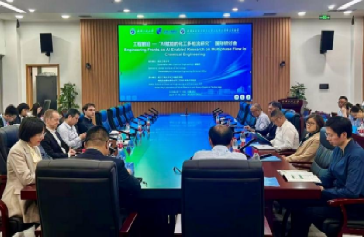
Opening Ceremony of the Conference
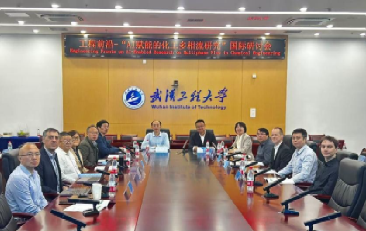
Group Photo of Attending Leaders and Experts
Professor Yu, Faquan, Standing Committee Member of Party Committee and Vice President of Wuhan Institute of Technology, attended the opening ceremony and delivered a speech. On behalf of the university, he extended a warm welcome to domestic and foreign experts and scholars traveling from afar, and expressed sincere gratitude to all sectors of society for their long-term care and support for the University’s development. He pointed out that the global chemical industry is currently accelerating its digital and intelligent transformation. AI-enabled multiphase flow research serves as a pivotal direction for supporting the design and optimization of chemical reactors, advancing the digital and intelligent upgrading of chemical processes, and underpinning the high-quality development of the chemical industry. He hoped that participating experts and scholars would focus on the key scientific issues and technical challenges in the research and application of AI-enabled chemical engineering multiphase flow, conduct in-depth discussions on intelligent research methods and implementation pathways for complex systems featuring non-equilibrium, multi-scale and strong nonlinear characteristics, continuously promote the in-depth integration of artificial intelligence and chemical engineering multiphase flow, and contribute wisdom and strength to the green, low-carbon and high-end development of the chemical industry.
Featuring rich content and cutting-edge topics, the symposium arranged a series of academic reports and special seminars in the main venue. Renowned domestic and international experts including Ge Wei, Henrik Ström, Ye Mao, Jia Wei Chew, Hesameddin Fatehi, Liu Zuohua, Jin Hui, Zhou Chenyang, Atta Ullah, Thomas Lichtenegger, Charley Wu and Kentaro Umeki delivered excellent keynote speeches focusing on hot research directions such as multi-scale coupling and predictive reactor modeling, intelligent chemical industry large models, mechanism-data coupled simulation of multiphase systems, biomass-derived syngas production, intelligent dry separation of gas-solid fluidization, data-driven modeling, the application of AI in multi-scale multiphase reactive flow, particle process simulation, and biomass gasification. Their presentations fully demonstrated the latest achievements and broad prospects of AI-enabled chemical multiphase flow research.
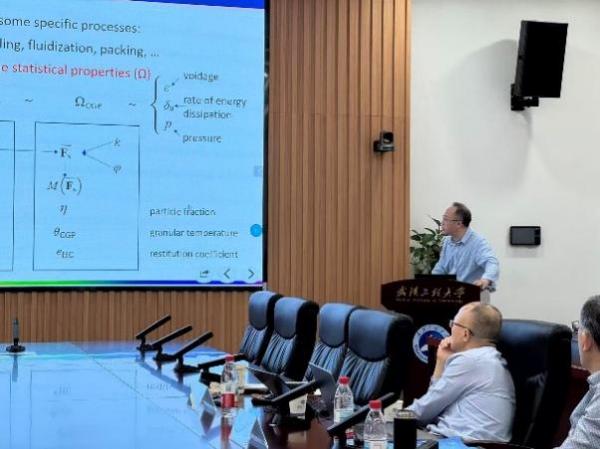
Professor Ge Wei from the Institute of Process Engineering, Chinese Academy of Engineering, delivered an excellent academic report
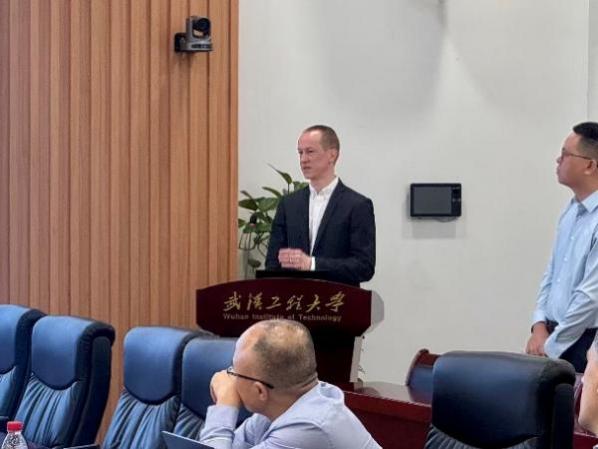
Professor Henrik Ström, Chalmers University of Technology, Sweden, delivered an excellent academic report
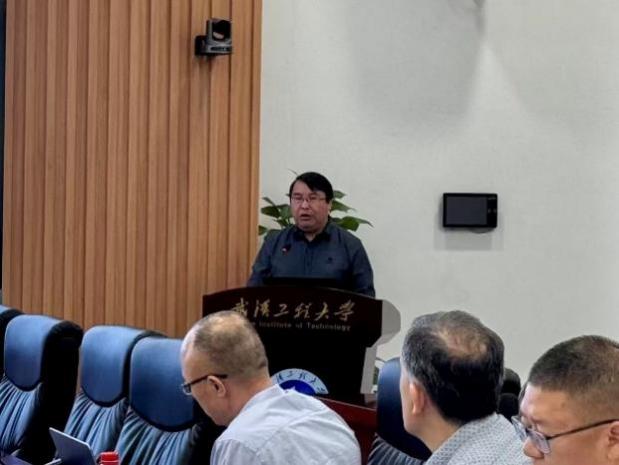
Professor Ye Mao from Dalian Institute of Chemical Physics, Chinese Academy of Sciences, delivered an outstanding academic report
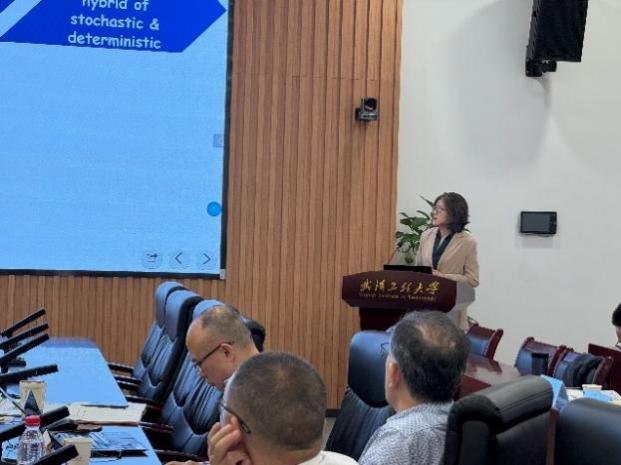
Professor Jia Wei Chew, Chalmers University of Technology, Sweden, delivered a splendid academic report
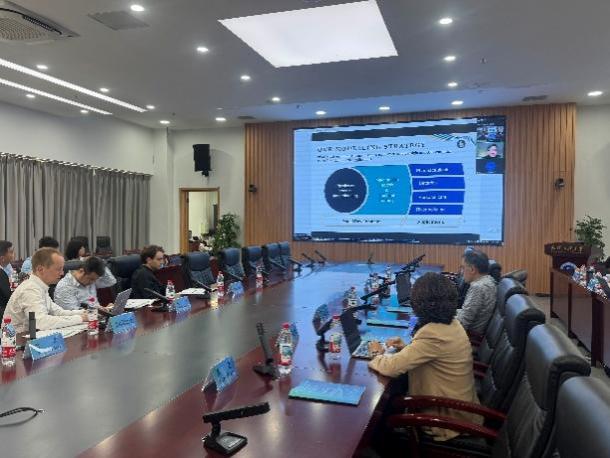
Professor Charley Wu, University of Surrey, delivered an excellent online academic report
The symposium mainly focused on three key directions: basic data acquisition of chemical multiphase flow, development of AI-enabled algorithms for chemical multiphase flow, and AI-accelerated research and application of chemical multiphase flow. It aims to build a high-level international academic exchange platform and promote the collision of innovative ideas as well as the in-depth development of international cooperation. All participating experts agreed that artificial intelligence technology is providing new research paradigms and methodological support for multiphase flow research in chemical engineering, while bringing new opportunities for the design and optimization of chemical reactors, process intensification and the intelligent upgrading of the chemical industry.
The successful convening of this international symposium has further strengthened academic ties between our university and experts and scholars from universities and research institutions at home and abroad. It also highlights the university’s academic influence and openness to cooperation in the field of chemical engineering, especially in the interdisciplinary research of multiphase flow and intelligentization. Taking this symposium as an opportunity, the university will further advance the in-depth interdisciplinary integration of artificial intelligence and chemical engineering, continuously enhance its capacity for scientific and technological innovation and international exchange and cooperation, and make greater contributions to meeting major national strategic needs and boosting the high-quality development of the industry. (Reviewed by Xiong Qingang, Yu Xianglin)